Why Sherman Oaks Sewers Fail South of Ventura Boulevard

Why Sherman Oaks Sewers Fail South of Ventura Boulevard

The residential blocks running south from Ventura Boulevard toward Mulholland Drive carry a distinction most Sherman Oaks homeowners would rather not claim. They fail their sewer laterals at rates that exceed almost every other corridor in the San Fernando Valley, and they do it for reasons that trace directly to three overlapping forces: the age of the housing stock, the material the laterals were built from, and the tree canopy that grew up alongside them for seventy years. Understanding this is the difference between a homeowner who watches the problem arrive and one who replaces the lateral before it backs up into the house.

The same corridor that gives Sherman Oaks its character, the mature ficus, magnolia, and sycamore canopy arching over Hazeltine Avenue, Kester Avenue, and Woodman Avenue, is also the corridor that drives root intrusion failure in vitrified clay pipe. Trenchless sewer line replacement in Sherman Oaks became the dominant repair method specifically because every other option would destroy the landscaping and hardscape that make these properties worth what they cost.

Clay pipe expiration

Sewer lines last 30 to 100 years depending on the material. Outdated Orangeburg and clay sewer pipes last 30 to 60 years, while PVC, cast iron, and copper sewer lines last 50 to 100 years. The life expectancy ultimately depends on maintenance, soil condition, and nearby tree roots. Sherman Oaks residential construction south of Ventura Boulevard peaked between 1945 and 1965, putting the median clay lateral at 60 to 80 years old and past its documented service life.

Ficus destroys SoCal sewers

In Southern California neighborhoods, ficus (strangler fig and Indian laurel fig) is one of the most destructive trees due to its powerful surface and subsurface root growth, followed by willow, eucalyptus, and jacaranda. The corridors along Hazeltine Avenue, Kester Avenue, and Woodman Avenue were landscaped heavily with ficus and magnolia during the 1950s and 1960s development cycle, which is the exact combination driving the failure rate above the rest of the Valley.

Trenchless saves 30 to 50 percent

Trenchless sewer repair methods like CIPP lining and pipe bursting typically cost around $80 to $200 per foot, avoid most excavation, and can deliver 30 to 50 percent total project savings in complex or hardscape-heavy properties, providing a new jointless corrosion-resistant pipe with a 50-plus year design life. Sherman Oaks south-of-Ventura properties sit at the extreme end of the hardscape-heavy category, with mature landscaping and custom concrete routinely sitting directly over the lateral corridor.

The Housing Stock That Defines the Failure Pattern

Sherman Oaks south of Ventura Boulevard is dominated by post-war ranch and split-level construction built between 1945 and 1965, with pockets of 1930s Spanish Revival on the older hillside streets and mid-century modern infill scattered through the Longridge Estates, Chandler Estates, and Valley Vista corridors. The vast majority of these homes were originally connected to the municipal sewer through vitrified clay tile lateral pipe, which was the standard specification for residential sewer service in Los Angeles County through the late 1960s. Clay was affordable, widely available, and durable enough to satisfy the plumbing codes of the era.

Clay tile pipe carries a documented service life of roughly 50 to 60 years in Southern California soil conditions. A Chandler Estates ranch built in 1955 with original clay lateral pipe is now approaching or past the seventy-year mark, and the statistical probability of active failure on that pipe is no longer a question of if but of when. The math is straightforward. A neighborhood where the median construction year for lateral pipe is 1952 to 1958 is a neighborhood where the median lateral is now past its expected service window.

The housing stock north of Ventura Boulevard, on the flat Valley floor through Van Nuys and Valley Glen, skews slightly newer on average and carries a higher percentage of ABS drain pipe installed during 1970s and 1980s redevelopment. The concentration of aging clay is materially denser on the south side. That density is the first variable driving the failure rate imbalance.

Why Clay Tile Pipe Fails the Way It Does

Vitrified clay does not fail like steel or copper. It does not corrode uniformly or wear through from the inside. Clay fails at its joints and through hairline cracks that develop when the pipe is disturbed by soil movement, tree root pressure, or seismic activity. Each clay tile section runs roughly two feet long and connects to the next section through a bell-and-spigot joint originally sealed with mortar or hot-poured bituminous compound. Seventy years of soil expansion cycles, minor earthquake displacement, and thermal movement degrade these joints before they degrade the pipe wall itself.

The failure sequence is predictable. A joint loosens. Soil moisture escapes into the pipe cavity or, more commonly, pipe contents weep out through the joint into the surrounding soil. Moisture escaping into soil above or alongside a mature tree root system is a chemical signal. Roots grow toward moisture gradients, and sewer laterals carrying warm, nutrient-rich wastewater are among the strongest such gradients anywhere in the soil column. The root does not crack the pipe. It enters through a joint that was already failing, then thickens, then branches, and eventually displaces the joint completely.

Once a root mass establishes itself inside the pipe, the lateral is on a terminal clock. Mechanical augering removes the visible root material but leaves the root channel intact. The roots regrow in weeks to months. Hydro jetting at 4000 PSI clears the line more thoroughly and strips smaller secondary roots, but it cannot seal the joint that let the root in. The only permanent resolutions are lining the pipe with cured-in-place epoxy, which bonds over the joint and denies the root a moisture signal, or replacing the pipe entirely.

The Ficus, Magnolia, and Sycamore Canopy That Drives the Failure Rate

Sherman Oaks south of Ventura Boulevard is one of the most heavily canopied residential zones in the Valley. The street trees planted by the Los Angeles Bureau of Street Services during the 1950s and 1960s neighborhood development cycle included heavy use of ficus (both Indian laurel and strangler fig varieties), southern magnolia, and California sycamore. All three species deliver exactly the qualities homeowners and the city wanted: wide canopy, dense shade, fast establishment, and a mature aesthetic that helps define the neighborhood character.

All three species also deliver the single most aggressive subsurface root behavior of any trees commonly planted in Southern California. Ficus in particular develops surface and subsurface root systems that can extend two to three times the canopy radius. A mature ficus on a parkway strip in front of a Hazeltine Avenue ranch has root structure extending well past the property line into the yard, through the lateral corridor, and often past the rear property line. Magnolia roots travel laterally near the soil surface and seek moisture with the same aggression. Sycamore produces large structural roots that physically displace pipe joints when they thicken against them.

The combination is the problem. Aging clay laterals with degrading joints, mature aggressive root systems sitting directly over and alongside those laterals, and a Southern California climate that keeps those root systems in growth mode nearly year round. Every third or fourth home on a typical Hazeltine or Kester block has either had a sewer lateral replacement in the last decade or is in the symptom-stage window leading to one.

The Hillside Pressure Factor on the Longridge and Royal Woods Corridors

Homes on the hillside blocks running up toward Mulholland Drive face a second failure factor that the flat corridor homes do not. LA DWP water service pressure in hillside Sherman Oaks and Longridge Estates routinely runs 80 PSI or higher at the meter, which sits at or above the upper bound the California Plumbing Code specifies as the safe operating window for residential copper distribution. The pressure itself does not damage clay sewer laterals, which are gravity drain systems and carry no pressure. But the water pressure drives failure on the supply side of the same homes, and it produces the slab leak pattern that runs parallel to the sewer lateral failures on the drain side.

A hillside Sherman Oaks property built in 1962 frequently presents with both problems at once on the service call. The original copper supply lines are thinning from pressure-driven thermal cycling on the hot water side, and the original clay sewer lateral is failing from root intrusion on the drain side. The two systems are independent, but they reach end of service life on overlapping timelines because they were installed in the same construction cycle and operate in the same soil environment.

Why Trenchless Replacement Became the Default in This Corridor

Open-trench sewer replacement on a typical Sherman Oaks south-of-Ventura property means cutting through some combination of mature landscaping, concrete or stamped-concrete driveway, brick or paver hardscape, established irrigation systems, and occasionally structural elements like retaining walls or pool decking. A 40-foot lateral running under all of that adds $4,000 to $8,000 or more in restoration cost on top of the base pipe work, and the restoration timeline runs weeks to months after the pipe work itself finishes.

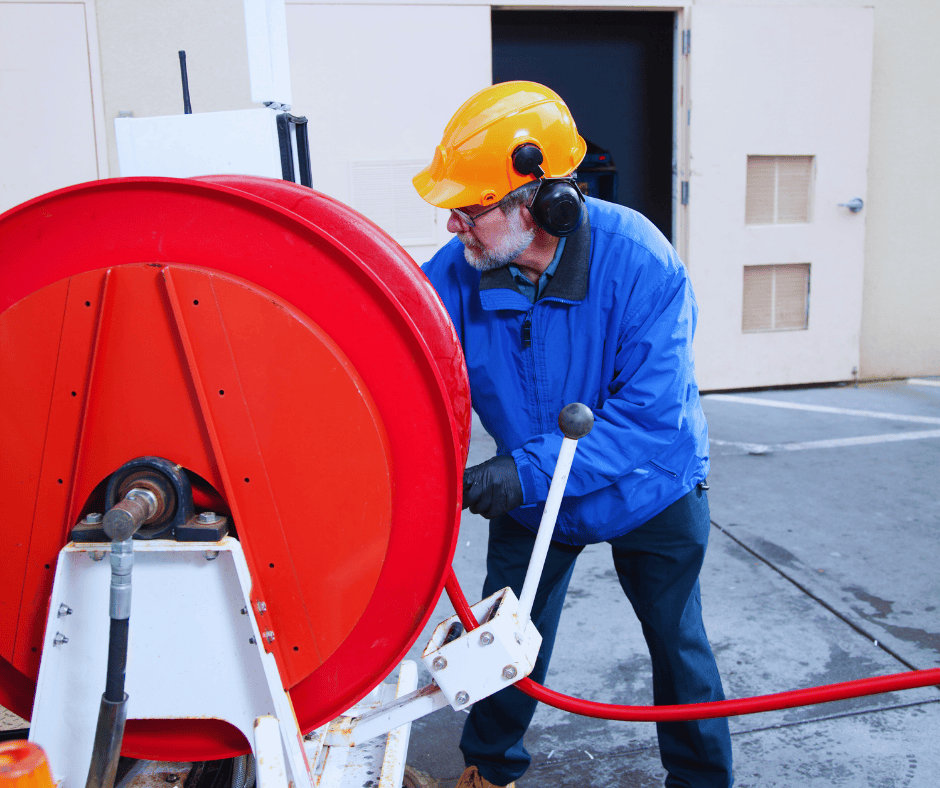
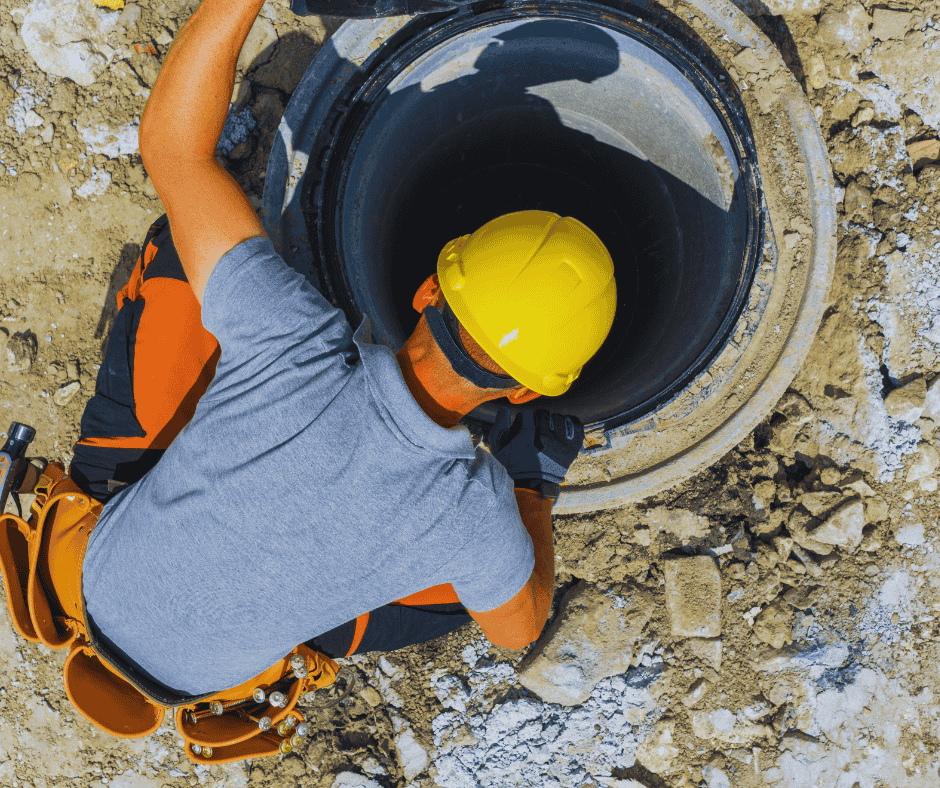
Trenchless replacement inverts the equation. Pipe bursting on the same 40-foot lateral requires two access pits, typically one at the house cleanout and one at the city sewer tap near the property line or in the parkway. The pits are roughly three feet by four feet. The pipe bursting head pulls through the old clay from the receiving pit to the launching pit, fracturing the clay and drawing in a new HDPE lateral in a single continuous operation. The project typically completes in one to three days on site. The landscaping, driveway, and hardscape stay intact. The only restoration needed is the two small access pits.

CIPP lining is even less invasive where it applies. A single cleanout access point, a felt-and-epoxy liner inverted into the existing pipe, a cure cycle of several hours, and the lateral is functionally replaced with a new jointless interior surface bonded to the inside of the old pipe. The existing clay stays in the ground as a structural sleeve. No pit at the street, no excavation at all beyond the cleanout itself. Where the lateral is structurally intact enough to accept the liner, CIPP frequently represents the fastest and least disruptive option available.

Soil Conditions Specific to the South-of-Ventura Corridor

The soil under Sherman Oaks south of Ventura Boulevard transitions from Valley alluvium on the flats to weathered granitic and sedimentary material as the grade rises toward Mulholland. Both soil types share a characteristic that matters for buried pipe: they swell and shrink significantly with seasonal moisture changes. Winter rains expand the clay fraction in the soil. Summer dry periods contract it. The cycle applies continuous differential stress to every buried pipe joint in the corridor.

Over seventy years of seasonal cycling, a clay tile joint experiences thousands of these micro-movements. Each one is small. The cumulative displacement is not. Joints that were water-tight at installation open to hairline gaps, then to visible gaps, then to offset misalignments where the spigot end of one pipe section sits slightly below or above the bell of the next. Offset joints create two separate problems at once: they invite root intrusion through the gap, and they create hydraulic turbulence that accelerates interior scale and debris deposits. Both accelerate the failure cascade.

LADBS Permits, LA County Sanitation, and the Compliance Layer

Sewer lateral replacement in Sherman Oaks requires a sewer permit (S-Permit) issued by the Los Angeles Bureau of Engineering, and if any portion of the work extends into the public right-of-way at the street, a Bonded Sewer Contractor must pull that portion of the permit. Under current Bureau of Engineering procedures, if there is no record of a previous sewer permit or connection at the property, the bureau may require a CCTV camera inspection of the house connection lateral as a condition of permit issuance, with a Bureau of Contract Administration inspector present during the CCTV. This is particularly common on older south-of-Ventura properties where the original 1950s connection records are incomplete.

LA County Sanitation District provides the downstream sewer service in some Valley jurisdictional overlaps and enforces its own lateral compliance standards where applicable. The permit pathway for a standard trenchless lateral replacement on a Sherman Oaks residential property typically approves in one to two weeks for straightforward scope, longer when the property sits in an overlap jurisdiction or when prior permit records are missing. Contractors familiar with the Bureau of Engineering S-Permit process, the BCA inspector coordination, and the Bonded Sewer Contractor requirements route these projects through without the correction notices and timeline extensions that less-familiar crews encounter.

What the Camera Actually Finds on a South-of-Ventura Inspection

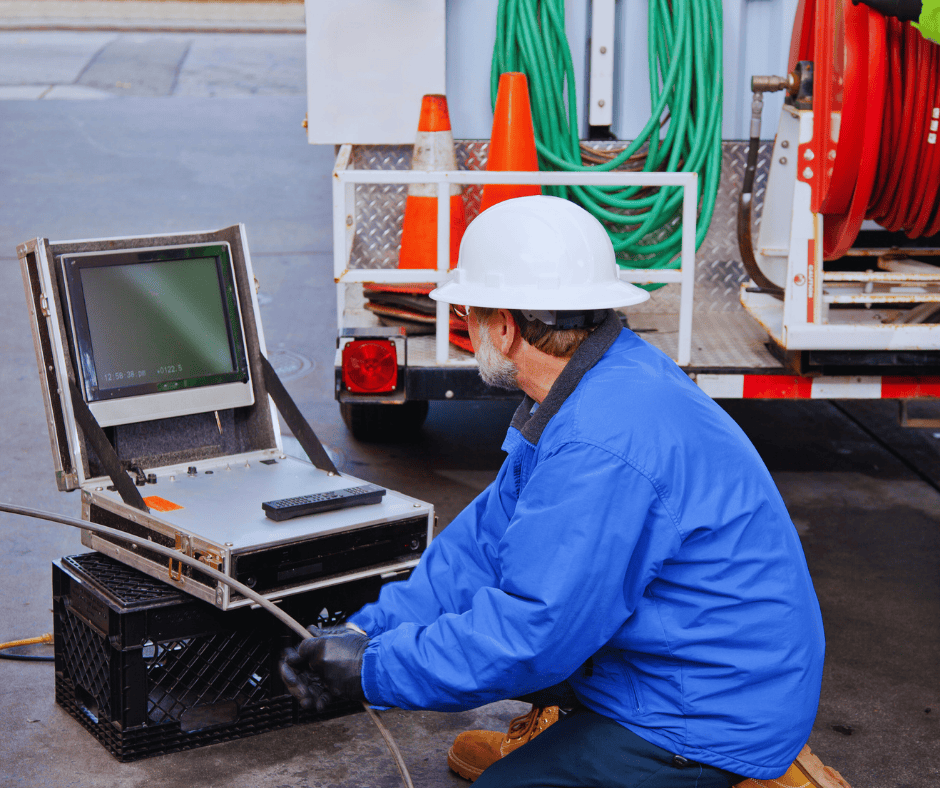
A RIDGID SeeSnake sewer camera inspection on a typical 1950s ranch in zip code 91423 or 91403 documents a predictable progression. The first 5 to 10 feet from the house cleanout usually show acceptable condition because that section sits under concrete slab or close to the structure where soil movement is minimal. Between 15 and 40 feet from the cleanout, the camera typically encounters the first root mass, concentrated at a joint near a mature tree. Beyond 40 feet, the camera often finds multiple intrusion points, early-stage bellies where the pipe has settled into a low spot, and offset joints where sections have displaced.

The inspection produces the exact data set that determines the correct repair method. A lateral with intact structural shape and moderate root intrusion at several joints qualifies for CIPP lining, which reconstructs the interior pipe surface without excavation. A lateral with a collapsed section, a severe belly, or offset joints greater than roughly one inch usually requires pipe bursting, which replaces the entire lateral by pulling a new HDPE pipe through the old one while a pneumatic bursting head fractures the clay outward into the surrounding soil. The camera inspection is not an optional step. It is the only way to specify the method correctly before quoting the work.

Method Selection on a Real Sherman Oaks Project

The choice between CIPP lining and pipe bursting on a south-of-Ventura property depends on what the camera finds, not on homeowner preference. A 1954 ranch on a Hazeltine block with a 50-foot lateral showing moderate root intrusion at three joints and no structural collapse is a textbook CIPP candidate. The existing clay still carries the shape load. The liner seals the joints, blocks root intrusion, and extends service life by another 50 years. The project runs one day on site with a single access point at the cleanout.

A 1948 ranch on a Chandler Estates block with the same 50-foot lateral, but where the camera shows a 15-foot section with offset joints exceeding two inches, plus a bellied section that pools waste, requires pipe bursting. CIPP cannot reconstruct pipe geometry. Pipe bursting replaces the entire lateral with new HDPE on the same alignment, corrects the alignment issues, and delivers the same 50-plus year service life. That project runs two to three days with two access pits.

The edge case worth naming: a lateral that has fully collapsed across a meaningful section, where the soil has backfilled the void, cannot be burst or lined. The bursting head has no pipe to follow and the liner has no interior to bond against. This is the rare case where open-trench excavation is genuinely unavoidable. Experienced trenchless contractors identify this condition on the camera inspection and name it clearly, rather than attempting a trenchless method that cannot work.

The Cost Math on a Typical South-of-Ventura Replacement

Trenchless sewer line replacement on a standard 40 to 60 foot Sherman Oaks residential lateral currently runs in the range of $4,000 to $15,000 for the installed pipe work, depending on method, length, depth, and access complexity. CIPP lining typically falls in the lower half of that range because it requires less equipment mobilization and less excavation. Pipe bursting sits in the middle to upper range because it requires the bursting equipment setup and two access pits. Permit fees, camera inspection, and hydro jetting pre-treatment where roots need clearing before lining add to the base figure.

Open-trench replacement on the same property runs $10,000 to $30,000 or more once landscape restoration, driveway replacement, and hardscape reinstatement are factored in. The bare pipe work is often competitive with trenchless on a linear-foot basis, but the restoration cost is where the economics diverge severely. The 30 to 50 percent total project savings that trenchless delivers compared to dig-and-replace is real, and it gets larger the more hardscape and landscape sit over the lateral corridor.

What This Means for Homeowners on the South Side of Ventura Boulevard

The homeowner on a 1955 ranch in Chandler Estates who has never had a sewer lateral problem is not exempt from the failure pattern. The probability model says the lateral is either actively failing at a level not yet producing interior symptoms, or it is entering the final decade of its service life. The homeowner who experiences a first sewer clog in 2026 on a pre-1970 clay lateral is not experiencing a random event. They are receiving the first notification of a failure sequence that has been developing underground for a decade or more.

The correct response is a camera inspection to document the current condition. Depending on what the camera shows, the response is either ongoing hydro jetting maintenance on a 12 to 24 month cycle while the line is monitored, CIPP lining to extend service life before structural failure develops, or pipe bursting replacement before the next failure becomes a full backup event. The wrong response is repeated mechanical augering that clears symptoms without addressing the root channel, because each augering cycle accelerates joint degradation while the underlying failure continues.

Why Sherman Oaks Homeowners Call ServiStar Plumbing and HVAC

ServiStar Plumbing and HVAC dispatches 24 hours a day, seven days a week from 13351 Riverside Drive, Suite 414, at the center of Sherman Oaks zip code 91423, serving the full south-of-Ventura corridor along Hazeltine Avenue, Kester Avenue, Woodman Avenue, Chandler Estates, Longridge Estates, Valley Vista, and the adjacent Sherman Oaks Hills, plus Encino, Studio City, Van Nuys, Toluca Lake, and the surrounding San Fernando Valley. CSLB Licensed, Bonded, and Insured under C-36 Plumbing and C-20 HVAC classifications. Every sewer lateral project includes RIDGID SeeSnake camera inspection, hydro jetting where roots need clearing, correct method selection between CIPP lining and pipe bursting, LADBS S-Permit application and Bureau of Contract Administration coordination, and Bonded Sewer Contractor permit handling where the work extends into the public right-of-way. Free in-home estimate. Upfront flat-rate pricing. Financing available. Call (818) 873-0613 for same-day trenchless sewer inspection and replacement throughout Sherman Oaks and the San Fernando Valley.


 

Frequently Asked Questions


Standard homeowners policies in California generally do not cover sewer lateral replacement caused by gradual wear, tree root intrusion, or age-related clay pipe failure, which are the three dominant failure modes on south-of-Ventura-Boulevard properties. Insurance companies classify these as maintenance issues rather than sudden covered events. Coverage does sometimes apply when the failure produces interior water damage, where the damage cleanup inside the home may be covered even though the pipe itself is not. Separate sewer line endorsement policies (often offered through service line coverage add-ons or standalone products from companies like HomeServe) specifically cover sewer lateral replacement and can run $5 to $15 per month, with coverage caps typically between $8,000 and $10,000. Homeowners on pre-1970 Sherman Oaks properties with original clay laterals frequently find that adding a service line endorsement before a failure event pays for itself on the first claim. ServiStar Plumbing and HVAC provides documentation suitable for service line insurance claims on every camera inspection and replacement project, along with free in-home estimates and 100 percent financing for uncovered work. Call (818) 873-0613.

The single most reliable way is a RIDGID SeeSnake camera inspection through the house cleanout, which documents the pipe material on video within the first 10 to 15 feet of the lateral and then confirms whether the same material continues to the city tap. Absent a camera, the age of the home is the strongest proxy signal. Sherman Oaks homes built between 1940 and 1970 south of Ventura Boulevard almost universally started with vitrified clay tile sewer laterals, and the majority of those laterals have never been replaced. Homes built 1980 or later typically carry ABS or PVC. Other indicators include property records showing no prior sewer permit at the Bureau of Engineering, recurring slow drains affecting multiple fixtures at once, patches of unusually green lawn or soggy spots along the lateral corridor during dry weather, and tree canopy within 15 to 20 feet of the likely lateral path. If any two of those signals are present on a pre-1970 Sherman Oaks property, the probability of active clay lateral failure is high enough that camera inspection is the rational next step. ServiStar Plumbing and HVAC runs same-day camera inspection throughout Sherman Oaks zip codes 91423 and 91403. Call (818) 873-0613.

The threshold most experienced Sherman Oaks plumbers apply is the three-clog rule within a 12 to 18 month window. One clog in a pre-1970 clay lateral is a signal. Two clogs in the same lateral within a year indicates the root channel has reestablished and mechanical clearing is no longer a lasting solution. Three clogs in 12 to 18 months on the same lateral confirms the failure has entered the terminal phase, and continued augering accelerates joint degradation while the underlying problem progresses. The cost math reinforces the decision point. A standard rooter service call in Sherman Oaks runs $250 to $500. Three such calls in 18 months total $750 to $1,500 with zero structural improvement to the lateral. A CIPP lining project on the same lateral runs $4,000 to $9,000 and extends service life by 50 years. Pipe bursting replacement runs $6,000 to $15,000 for a 40 to 60 foot lateral and extends service life by 50 to 100 years. At roughly the third rooter call, the replacement math starts earning back within two years and then continues delivering for decades. ServiStar Plumbing and HVAC runs camera inspection as the decision-point diagnostic on every recurring-clog call, presenting the repair and replacement options with clear pricing before any work begins. CSLB Licensed, Bonded, Insured. 24/7 dispatch from 13351 Riverside Drive in Sherman Oaks. Call (818) 873-0613.